The Ocean Is Changing - And What We Put On Our Skin Is Part of the Story
The sea has been quietly carrying our weight
Here on the West Sussex coast, the sea is part of our daily life. We make everything by hand a stone's throw from it, the light that comes off it ends up in our photographs, and on a good morning it's the first thing James and I look at. So when World Ocean Day rolled around this week, it didn't feel like a calendar box to tick. It felt personal.
And here's the thing I keep coming back to: the ocean has been doing us an enormous favour for two hundred years, and almost nobody talks about it. Since the Industrial Revolution, the sea has soaked up roughly a third of all the carbon dioxide we've pumped into the atmosphere from burning fossil fuels. That's a colossal amount of our mess, absorbed quietly, out of sight. The trouble is that taking on all that CO₂ doesn't come for free. It's slowly changing the chemistry of the water itself.
What "ocean acidification" actually means (in plain English)
When carbon dioxide dissolves into seawater, it triggers a chemical reaction that makes the water very slightly more acidic. Scientists measure this on the pH scale, and since the Industrial Revolution the surface of the ocean has dropped by about 0.1 pH units. That sounds tiny - almost nothing. But pH works like the Richter scale for earthquakes: each step is a huge leap, not a small one. So that modest-looking 0.1 actually represents around a 30% increase in acidity. In two centuries. That's fast, in ocean terms.
The short version: more CO₂ in the air means more CO₂ in the sea, and that makes the water more acidic. The ocean has been protecting us from the worst of climate change by absorbing our carbon, but it's paying a price to do it.
Why a shellfish should matter to all of us
Here's where it stops being abstract. Loads of sea creatures, oysters, mussels, clams, corals, and tiny floating plankton, build their shells and skeletons out of calcium carbonate, the same stuff as chalk. More acidic water makes it harder for them to build and keep those shells. There's a well-known image scientists use of a pteropod (a sea snail the size of a pea, sometimes called a "sea butterfly") with its shell visibly dissolving in more acidic seawater. It's a haunting little picture.
Now, a sea snail might feel a long way from your bathroom shelf. But these tiny calcium-building creatures sit right at the base of the marine food web. The little things feed the bigger things, which feed the bigger things again, all the way up to the fish that more than a billion people around the world rely on as their main source of protein. Wobble the bottom of that pyramid and you eventually feel it at the top. This isn't only about saving a charming snail (though, honestly, I'd quite like to). It's about the food system the whole planet leans on.
The bit nobody enjoys hearing: it won't bounce back overnight
I'm not in the business of doom, so I'll keep this honest and brief. CO₂ doesn't pass through the atmosphere quickly - it lingers for hundreds of years. Which means even if we stopped every bit of fossil-fuel burning tomorrow, the ocean wouldn't simply reset by next summer. The changes we make now play out over a very long timescale.
I find that sobering, but also weirdly motivating. Because if the effects are long, then so are the benefits of getting it right. Every choice that keeps a bit more carbon and a bit more rubbish out of the system is a choice that keeps paying off for decades. The ocean has been patient with us. The least we can do is start paying it back.
So what on earth does this have to do with skincare?
Fair question — and I want to answer it honestly rather than dress it up. Skincare isn't the cause of ocean acidification; fossil fuels are. But the two are more connected than they first appear, and it comes down to two things we genuinely have control over: what goes into our products, and what we put them in.
What goes down the drain ends up in the sea
A huge amount of conventional skincare is built on petrochemicals - ingredients derived from the very same fossil fuels driving the problem. Synthetic fragrance, certain silicones, some sulphates, and the "liquid plastics" used as fillers all trace back to that supply chain. And every day, a lot of it gets rinsed off faces and bodies, washed down the drain, and carried, eventually, out to sea.
This is the whole reason Puremess exists the way it does. We're plant-based, we don't use synthetic fragrance, and we leave out sulphates and the other harsh synthetics that don't do your skin or the water any favours. I'd love to tell you we built it that way as some grand environmental masterplan. The honest truth is simpler: we never wanted to put anything on your skin we wouldn't be happy to see go back into the sea we live beside. Turns out that's a pretty good rule for both.
And then there's the packaging
This is the part I'm genuinely proud of, with one bit I'll be straight with you about. Here's where we actually are:
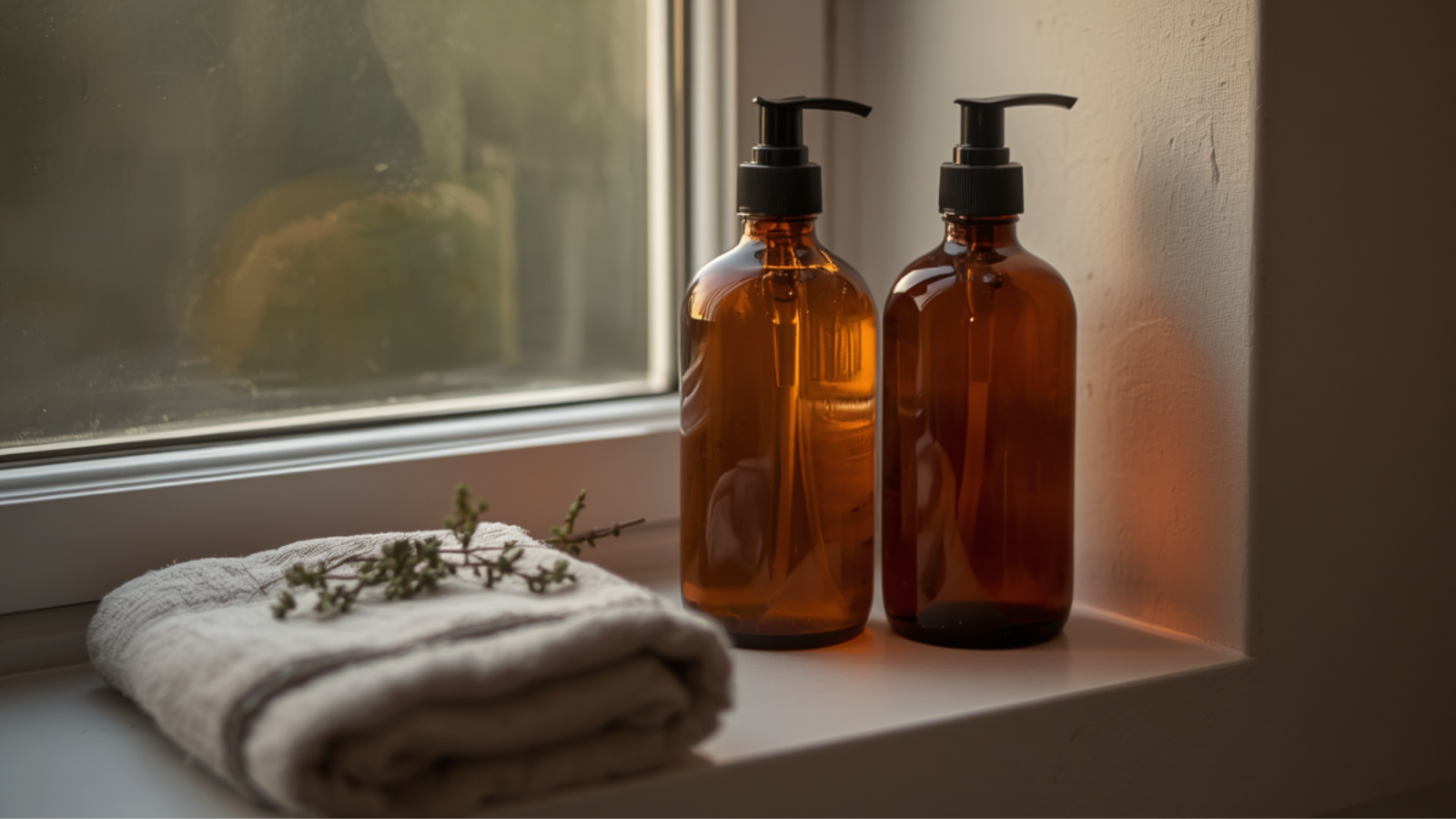
• Our bottles are made from prevented ocean plastic; plastic collected from coastlines and at-risk areas before it can wash into the sea, then given a second life as packaging. It's keeping existing plastic out of the water rather than making new plastic from scratch.
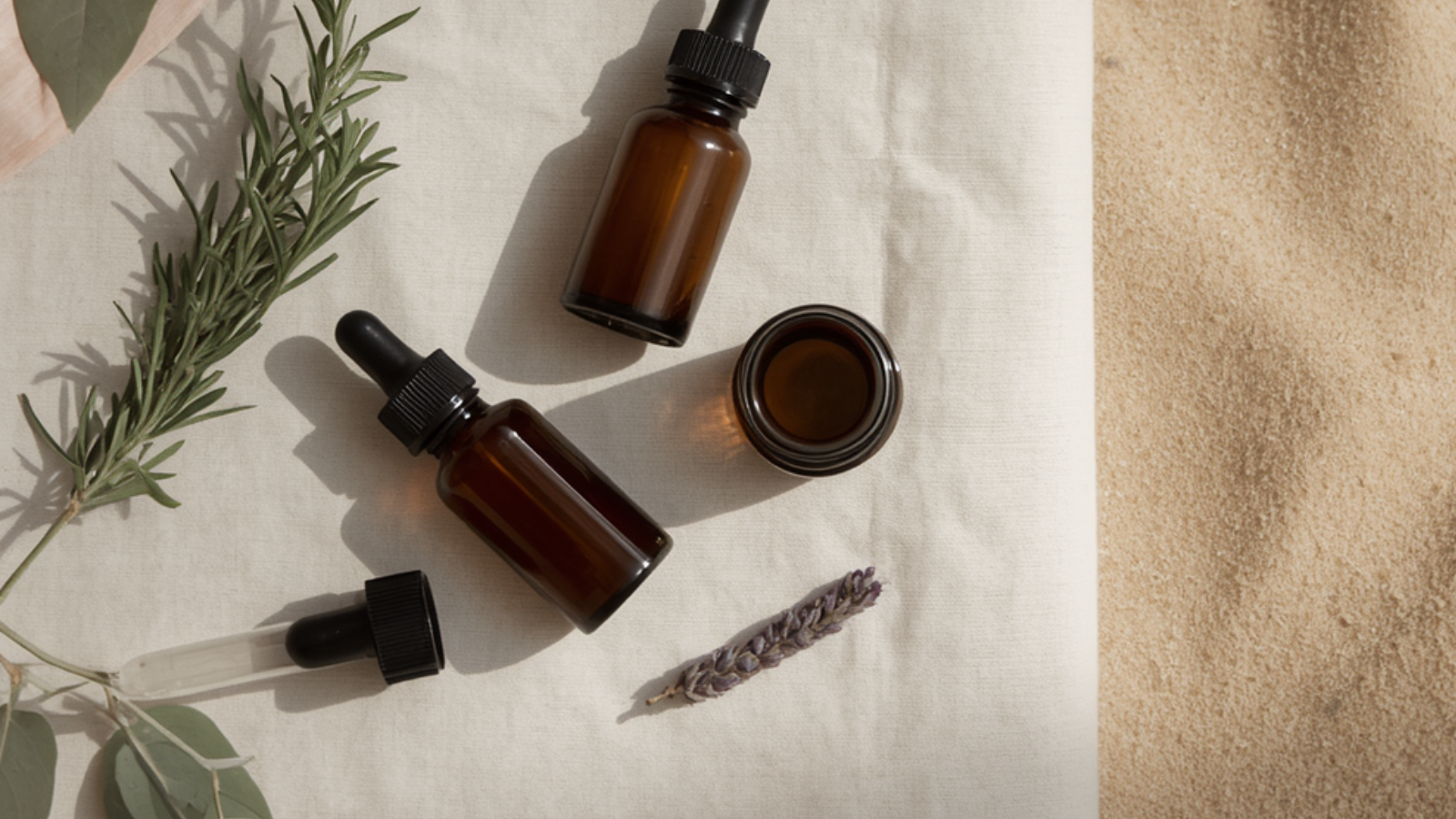
• Our serum, facial oil and beard oil come in 30ml amber glass; endlessly recyclable, and it protects the oils beautifully too.
• Our deodorants are in biodegradable cardboard; no plastic tube, designed to break down rather than hang around for centuries.
• Our jars are currently PET plastic; and I'm not going to pretend otherwise. We're working hard to move these over to prevented ocean plastic too, and we'll tell you the moment we get there.
That last point matters to me. "Honest beauty" can't only mean the flattering bits. We're not a perfect, zero-impact company and I'd never claim we were. We're a small, handmade brand trying to do meaningfully better than the norm, and being open about the work still in progress is part of the deal.
Small shelf, big sea
It's easy to feel like a bathroom cabinet is too small a place to make any difference to something as vast as the ocean. But the ocean's troubles are really just billions of small choices stacked up over time and so are the solutions. Choosing products that don't send petrochemicals down your plughole. Choosing packaging that keeps plastic out of the water instead of adding to it. Choosing brands willing to tell you the unfinished bits as well as the polished ones.
The sea has carried our weight quietly for two hundred years. This World Ocean Day, I just think it's worth carrying a little of its weight back, starting somewhere as ordinary, and as personal, as what we choose to put on our skin.
Lots of love,
Gemma x
P.S. A big thank you to Dr. Colin Summerhayes for his scientific input.
FAQ
What is ocean acidification, simply put?
It's what happens when the sea absorbs carbon dioxide from the air. The CO₂ reacts with seawater and makes it slightly more acidic. Since the Industrial Revolution the ocean's surface has become about 30% more acidic, which makes life harder for shell-building creatures like oysters, mussels and tiny plankton.
Does skincare cause ocean acidification?
No, that's driven by burning fossil fuels, not face cream. But a lot of conventional skincare is made from petrochemicals (the same fossil-fuel family), and those ingredients get rinsed down the drain and eventually reach the sea. Choosing plant-based, synthetic-free formulas is one small way to keep more of that out of the water.
What is "prevented ocean plastic"?
It's plastic that's been collected from coastlines and at-risk areas before it can wash into the sea, then recycled into new packaging. So rather than making brand-new plastic, it gives existing plastic a second life and keeps it out of the ocean. Our Puremess bottles are made from it.
Is all Puremess packaging plastic-free?
Not entirely yet, and we'd rather be honest than vague. Our oils come in recyclable amber glass and our deodorants in biodegradable cardboard. Our bottles are prevented ocean plastic. Our jars are currently PET plastic and we're actively working to move those to prevented ocean plastic too.
Do you sell sunscreen or SPF?
Not at the moment as proper SPF testing is hugely costly for a small brand, and we won't put a number on a bottle we haven't rigorously tested. We'd always rather say "not yet" than overpromise.

Written by Gemma Cockrell